Chinnor u3a Riviera Cruise holiday on the Rivers Rhone and Saone, Lyon to the Camargue
An Eleven Day Cruise with an Outing each day from the Ship, Lord Byron, June 2026
20 of us had a wonderful holiday with visits to Lyon, Cluny Abbey, Beaune’s magnificent Ancient Hospital and Courtyard, Ardeche Gorges with Eagle soaring over the valley, the Roman Pont du Gard, and the medieval village of Uzes, the Camargue Ornithological Park with hundreds of wild Flamingos taking to the wing, and the blue Mediterranean at Saintes-Maries-de-la Mer.
On the return cruise back to Lyon we called at Arles, famous for its Roman history and Van Gogh, visited an olive farm where we were shown round by the owner, an excellent narrator and humourist. Next was Orange with its Roman amphitheatre, and then to Chateauneuf-du-Pape - for a cellar tour and wine tasting,. We finished our holiday with a rather understated visit to Tournon. It did have a wonderful old suspension footbridge across the Rhone though and we saw ten hobbies soaring overhead escaping an approaching storm. Apart from that and one good soaking, we had great weather, not too hot and plenty of sunshine for us to wear our summer attire.
The service and food on the Riviera ship was second to none.
Cathy Whiteway and Colin Page have written in much more detail about our visits to Cluny Abbey and the Camargue. And these, with some photos, are shown below.
Visit to Cluny Abbey
One of the places we visited was the abbey of Cluny in Burgundy. It was founded in 910, for the salvation of his soul, by William I, Duke of Aquitaine. It began with 12 monks aiming for strict observance of the Benedictine rule in a hunting lodge donated by the Duke.
The initial settlement grew rapidly and over the centuries was added to and rebuilt several times, becoming a huge complex of beautiful buildings in golden sandstone. The Clunaic order established over 1000 monasteries across Europe, including in England Lewes Priory. France’s Henry VIII moment came with the 1789 French revolution. Over 90% of the buildings were demolished and sold off for the stone, and yet the remaining 8% of the abbey took us all afternoon to look round.
The question was asked ‘How did the abbey get so wealthy’? The answer turned out to be a combination of several things.
- At its foundation Duke William endowed it to be answerable only to the Pope, thus bypassing local feudal or episcopal control and taxation.
- The dependent abbeys of the Clunaic order which were founded across Europe paid tithes to the mother house.
- Cluny could provide services. ‘Are you concerned about the destination of your soul? Especially if your money has been gained in dubious ways, a donation to the Abbey will help to put things right.’
- ‘Would you like a private mass to be said? Or a funeral mass? Certainly: please see the schedule of fees.’
- And also, Cluny had an actual licence to coin money. Granted in 930 by King Raoul of the Franks, the right to mint coinage was a financially beneficial privilege.
Cathy Whiteway 17/06/2026
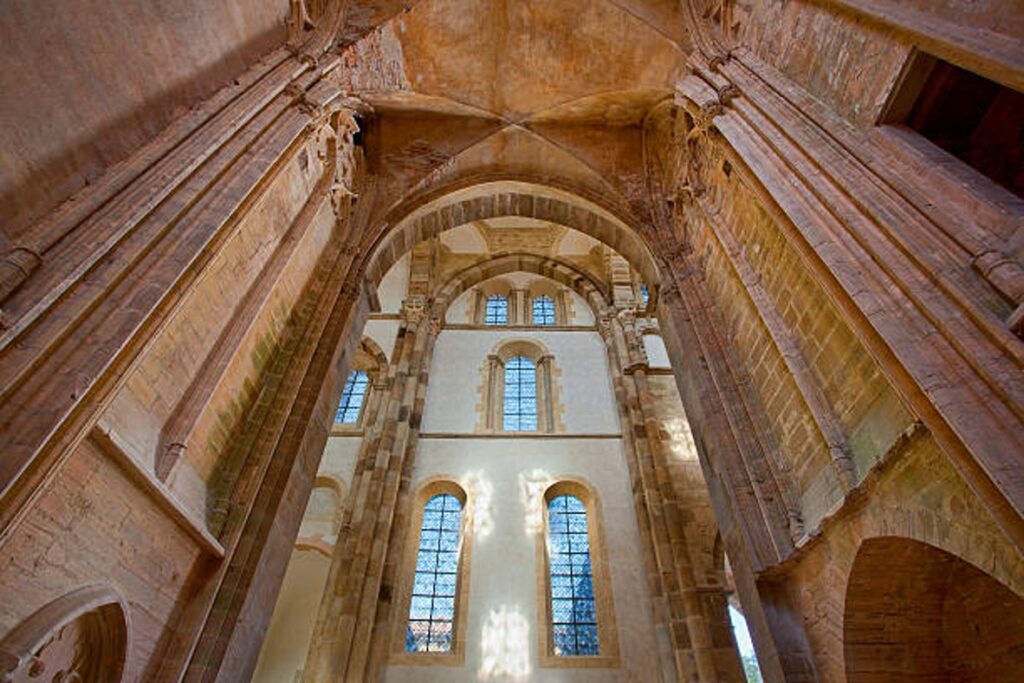
There was a moment which will be remembered by everyone who was there. The guide was telling us about the tower, a plain stone tower in the beautiful local stone, hugely high and remaining complete and roofed. She talked about the acoustics of the worship, and then sang, just her, just there, a plainsong solo. The echoing projection and resonance that the building gave to one voice was utterly lovely.
The Rhyme of the Ancient Mariners (from Cathy Whiteway with help from AI)
The Ancient Mariners packed their case
And left in dark of night;
They slipped away while England slept
And stars still held the light.
They’re going on a cruise at last
The Rhone's unhurried way,
With all inclusive comforts booked
For every passing day.
At Cluny Abbey stones will sing
Of centuries gone by,
While Lyon's rivers gently meet
Beneath a summer sky.
They'll pass through France's deepest lock,
Watch mighty waters rise,
As vineyards climb the valley slopes
Beneath blue southern skies.
Then Avignon with Papal walls,
And Arles in golden light,
Where Van Gogh was inspired
By landscapes rich with colours bright.
The aqueduct of Pont du Gard
Has bridged the centuries wide,
Above the rocks and lavender
That scents the countryside.
The Camargue spreads its silver marsh,
White horses running free,
Pink flamingos in the reeds
Beside the inland sea.
So here's to days of warmth and joy,
To every bend and view,
To friendship, sun and happy hearts,
Adventures fresh and new.
Visit to the Camargue
On the 7th day of our trip to France we went to the Camargue to see the Ornithological park there, and the local town (Sainte Maries de la Mer).
The Camargue is home to 260 species of birds, many migratory.
It is a huge area in the south of France, mostly of salt marshes, and it took us over an hour to reach the park. On the way, we admired the scenery, which was extensively rice paddy fields, an important product of this area.
[the area looks wild but is in fact man-made for cultivation purposes. Salt has been produced here since the 1800’s]
[even so, the land is so saline that it is necessary to cut freshwater channels from the river to the crop fields].
In the fields we saw lots of glossy ibis and white egrets. We also saw the famous Camargue white horses, and black bulls.
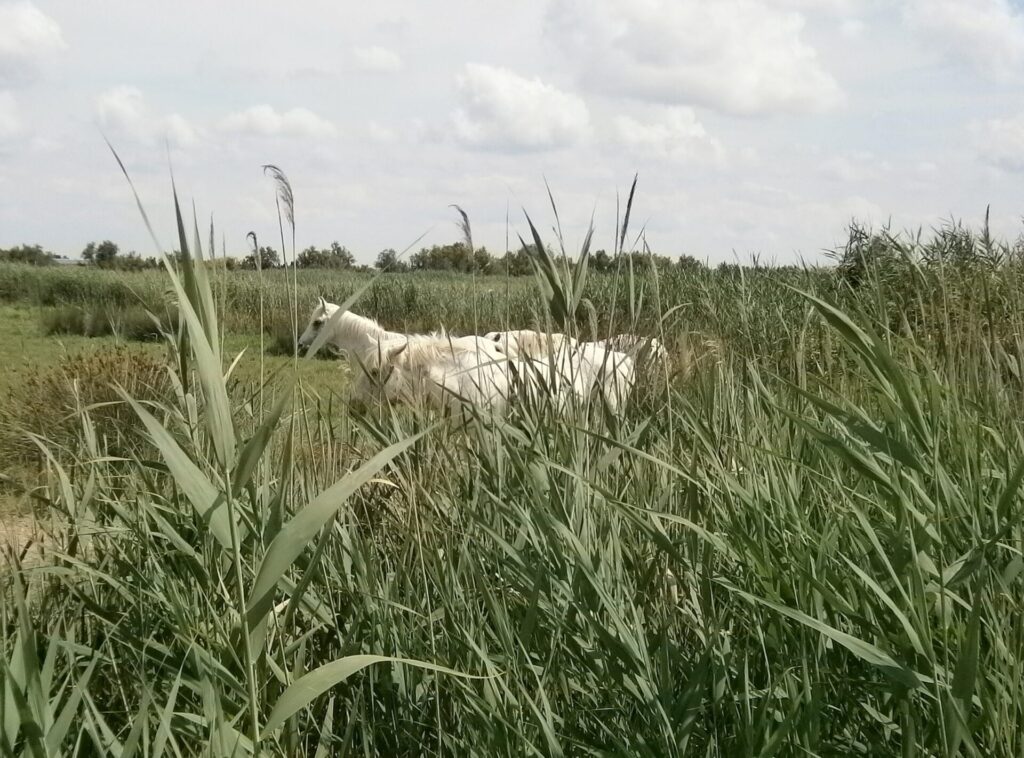
[the horses are in fact born in various colours and only turn white at maturity. They are totally adapted to the area and can withstand the heat of the summer and the high cold winds of the Camargue].
The area contains a massive, moated area of 86,300 hectares, which is mostly only 1- 4m deep. [a protected area within the Camargue].
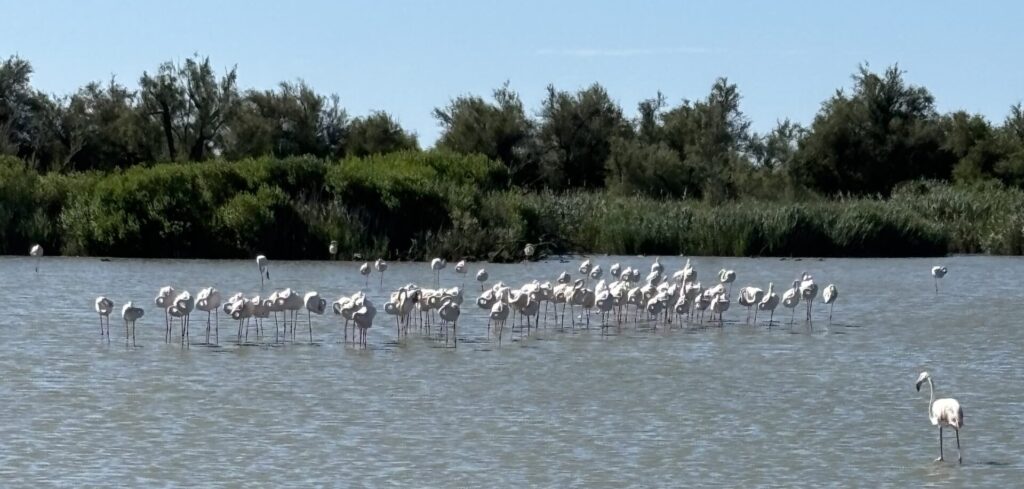
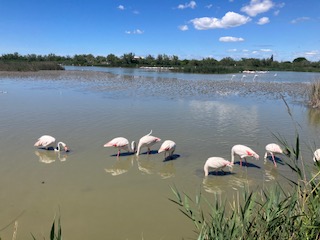
When we reached the park (Parc Pont de Gau), which had previously been just a zoo for animals, we were able to walk round a series of lagoons, where we saw many birds nesting in the trees, such as herons, storks and white egrets, and also flamingos wading in the water [they feed on crustaceans in the water].
Occasionally the flamingos would take flight, which was glorious to see, and never seen when they are in a zoo.
After the visit, we travelled to the local town of Sainte Maries de la Mer, the capital of the Camargue, where we visited its church, with famous crypt. Each year in May, the town is the scene of big celebrations by gypsies.
From there we travelled back to the ship. [which had moved down the Rhone River to the town of Arles].
In every town we visited on the trip, there were an abundance of swifts screeched round the buildings – lovely.
Colin Page 17/06/2026
We are now looking for leaders who might arrange another Chinnor u3a Cruise, to take place possibly in 2028, please could you contact Peter Hetherington or Cathy Whiteway.
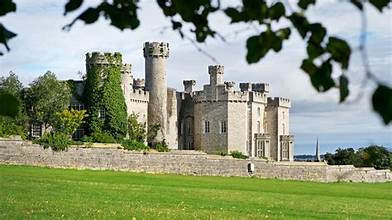
Holiday to Bodelwyddon Castle, North Wales - 13th to 17th April, 2026
The holiday to North Wales was a Great success. We got to the hotel at around 3:30 giving us plenty of time to settle in before dinner. On Tuesday we visited Chester and added a Blue Badge Guide for a 90-minute bus tour around the city. Wednesday saw us at Erdigg Hall – a beautiful National Trust property. We stopped off on our way back to the Hotel to admire a beautiful Marble church ... close to our hotel but too far for some to walk so the coach driver took us there. Thursday was an early start as we drove to Porthmadog to take the Ffestiniog Railway to Blaenau Ffestiniog then by coach to Portmeirion. Our journey home on Friday was eventful as one of the water hoses on the coach failed. The driver managed to get us to a Service Station where we had an early lunch. 90 minutes later and the driver had repaired the leak and we were back on the road arriving back in Chinnor at around 4PM.
We had 52 people book for the holiday but 10 cancelled in the last 3 weeks (2 on the day before we left). 6 were covered by insurance, 2 sold their place to friends (also u3a members) but the 2 who cancelled on the day before we were due to leave did not have any insurance.
Our next outing will be in June to the Cotswold Wildlife Park. We will launch it at the next Speakers Meeting (and also the Boat Trip from Marlow to Henley).
Holiday to the Isle of Wight - October 21st to 25th - 2025
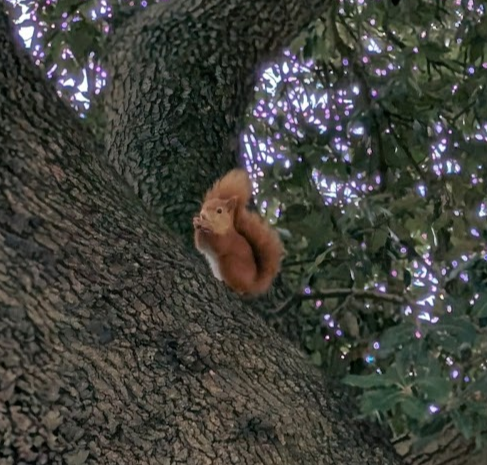
Click on the picture of the Red Squirrel to see the report.
Holiday to Holme Lacy, 31 March to 5 April 2025
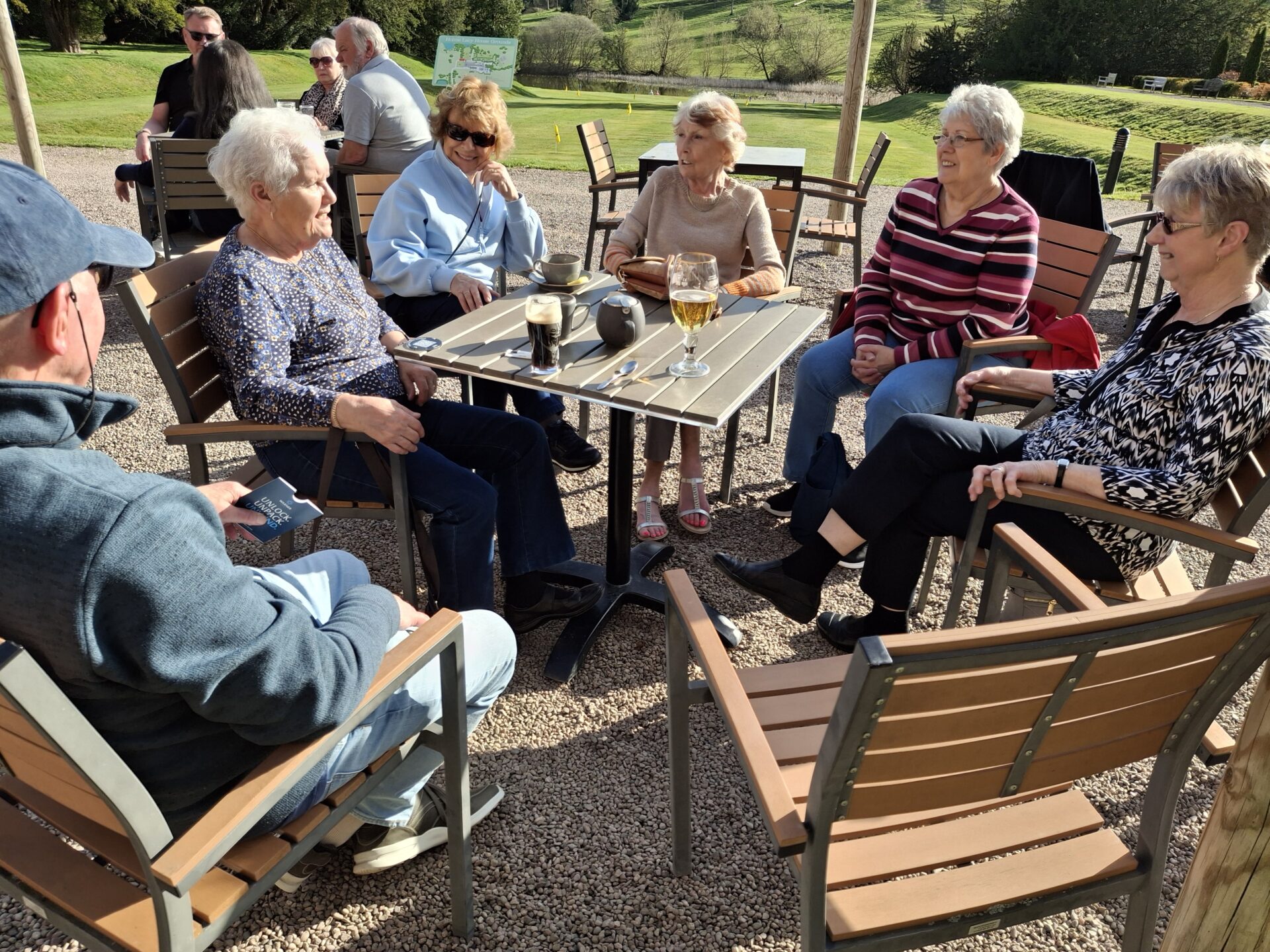
Forty-six members recently went on a holiday to Holme Lacy near Hereford on 31 March 2025. We left Thame at 9.30am being our last pick up and with our regular driver, Sam, drove to Stratford-upon-Avon. We had a couple of hours free to wander around in the glorious sunshine. Some of us walked down to the river and had an early lunch at the theatre, sitting outside admiring the view and watching the swans and ducks on the river. We arrived at Holme Lacy mid-afternoon and after the usual anxiety of finding rooms, several members found the terrace and had a drink in the sun.
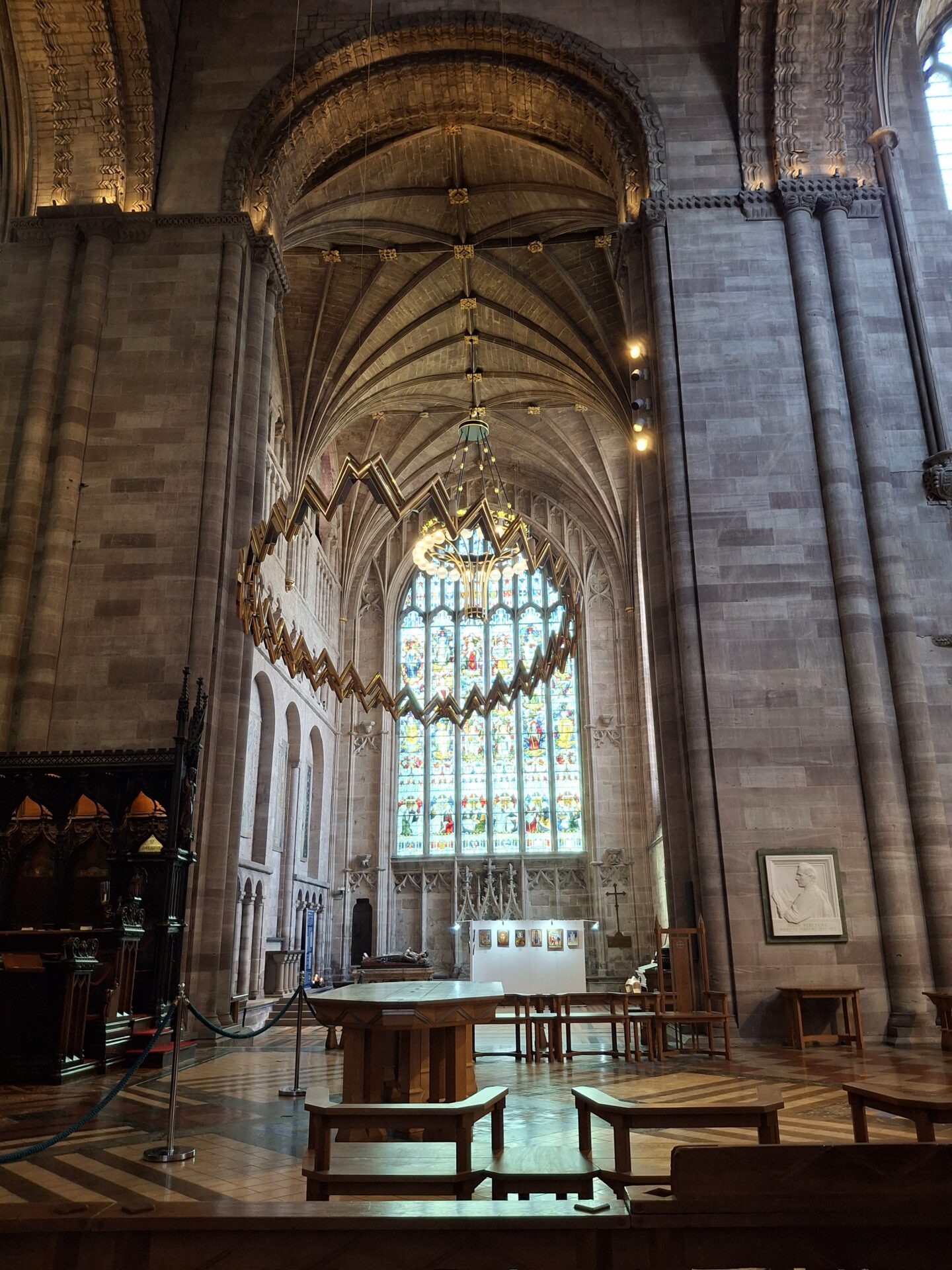
The next morning we were up early for breakfast at 8am, before boarding the coach for a visit to Hereford. Sam dropped us off and we separated to the shops, river and the cathedral. The cathedral has been there for 1,300 years. Norman pillars divide the 12th century nave from the 14th century side aisles. The cathedral is known for housing The Mappa Mundi, the largest surviving medieval world map which is displayed alongside the famous Chained Library. We were lucky enough to have a brilliant guide who told us about the library and the old and rare books held there. We had lunch in the secluded garden at the Cathedral, sitting in the sun and admiring the spring flowers, before returning to Holme Lacey.
We had time to walk round the grounds admiring the formal and Italian garden and the topiary of the elephant hedge before walking down to the lake. For those who did not go to Hereford, there were quizzes, line dancing or a visit to the spa.
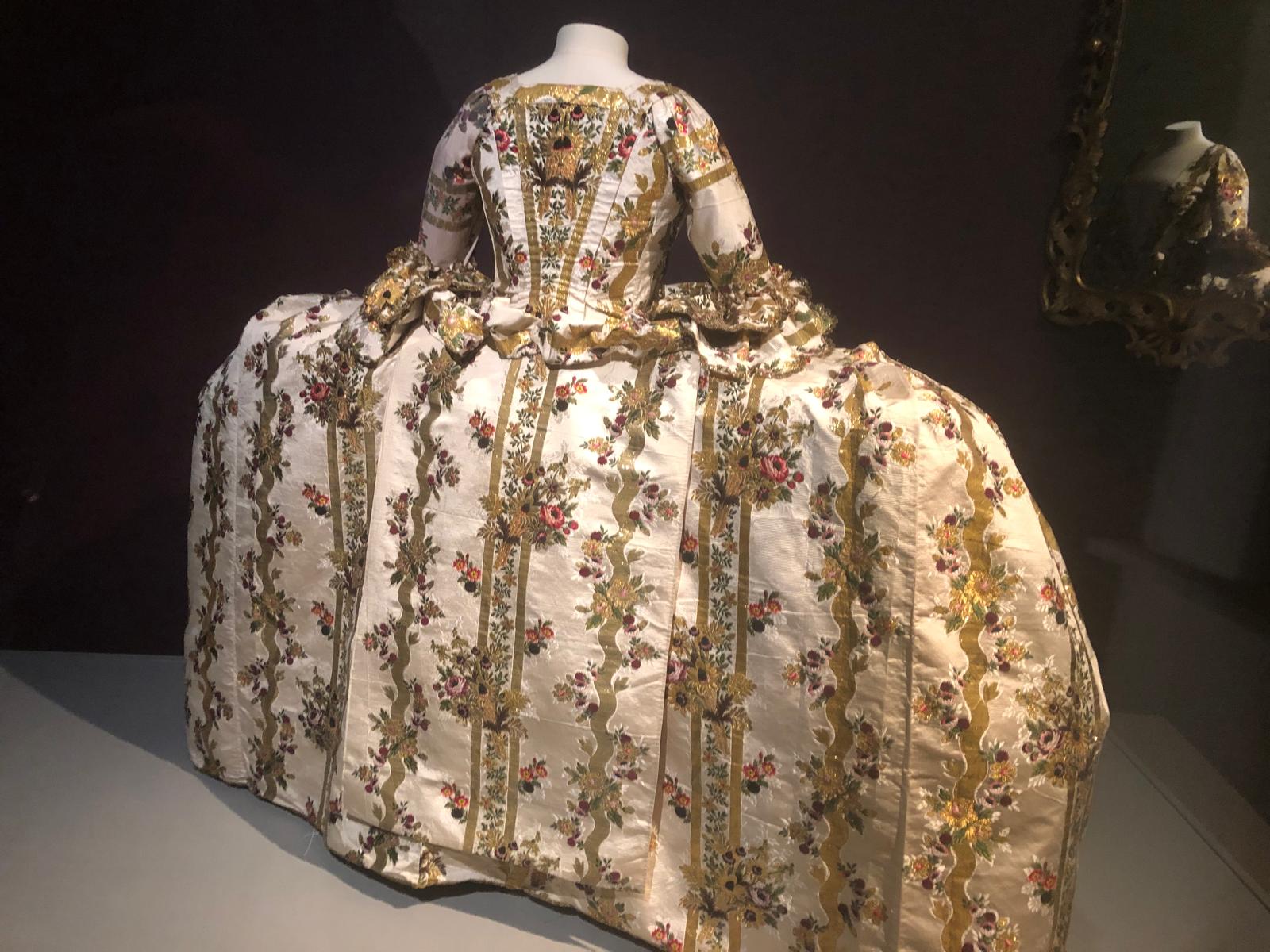
On Wednesday, we visited Berrington Hall, a National Trust property near Leominster. The Georgian house sits within Capability Brown’s final garden and landscape. The house designed by Henry Holland was home to the Harley, Rodney and Cawley families. Again we had a very knowledgeable guide and were directed to see a dress fit for a king. She said it was one of a hundred of the most valuable dresses owned by the National Trust. We duly admired Ann Harley's stunning 'court mantua' dress, which arrived in ten separate pieces, the largest being the skirt/petticoat which consisted of seven panels and measured over three metres long. It took skilled conservators a year to painstakingly piece the rare dress back together again.
After having lunch there Sam took us to Hay-on-Wye where we stayed for a while looking at the various book and antique shops. Unfortunately, several were closed as it was still early in the season for visitors. After dinner we again made for the theatre, the cinema or the lounges.
On our final full day, we made for the Brecon Beacons and arrived at the Visitor Centre by 11.45. There was a café and excellent shop. Some of us took advantage of the continuing good weather and went for a walk where we were lucky enough to see two skylarks.
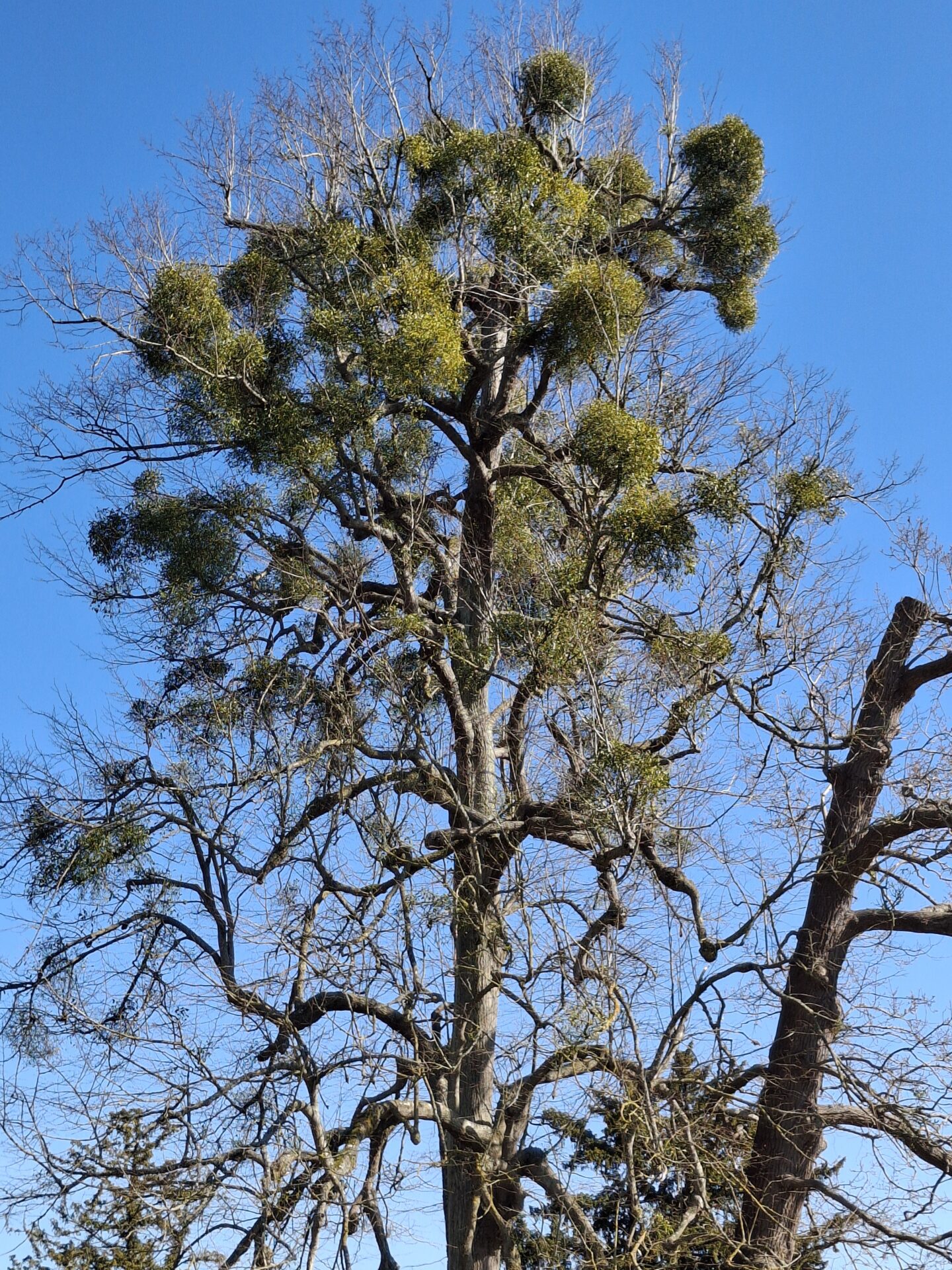
Sam took us on a different route back. There was disappointment that we did not manage to ride on a steam train, but it did not open until the week before Easter. We all noted the large amounts of mistletoe in the trees in Herefordshire, and discovered it is the county flower.
After another good dinner some of us visited the theatre for a celebration of Neil Diamond, a tribute show by Wayne Denton which we all enjoyed.
We left on Friday after breakfast for the drive home, stopping at Bicester Garden Centre for lunch and shopping. We arrived back in Chinnor early afternoon. A good break, helped by the fabulous weather.
Peggy Miles
Our u3a Holiday Cruising with Riviera on the River Douro in Portugal - October ‘24
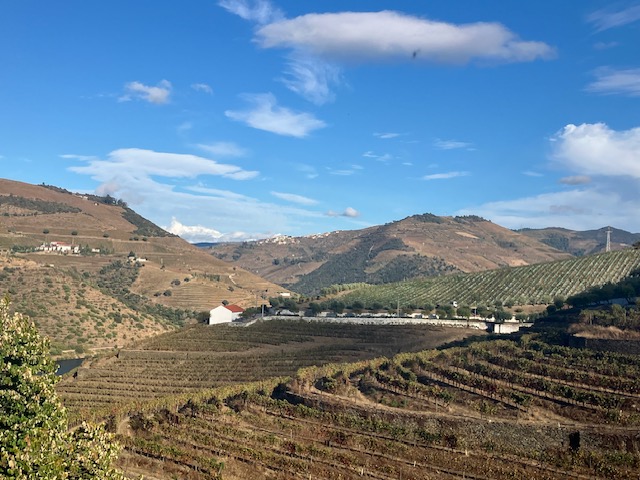
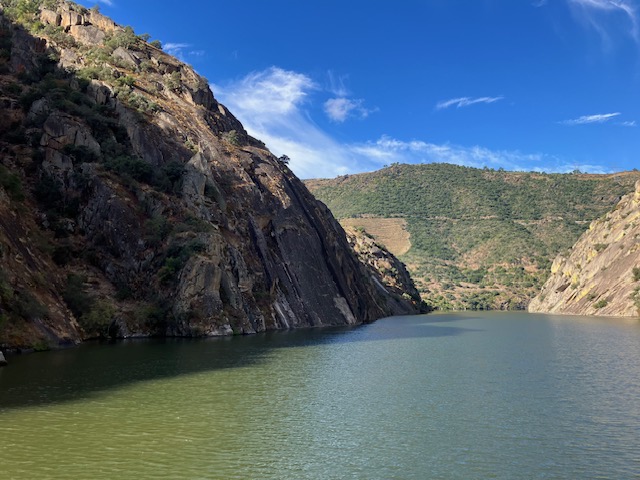
This was a holiday of a lifetime. We cruised the whole navigable length (210 km) up the Douro from Porto to the Spanish Border from where we visited the ancient City of Salamanca. We turned at this point to return to Porto. Leisure cruising has only been possible on the river from the late 1980’s when five massive dams were built to stem the wild waters. These are mainly to harness the water power for hydroelectricity. Locks were created by the side of each dam to allow for leisure cruising. The river passes through some magnificent scenery and passes many vineyards set on its steep banks. Tours of the cities of Oporto, its sister Gaia on the opposite bank and Salamanca were visit highlights and are reported on below by Jill Ives and Mike Dix.
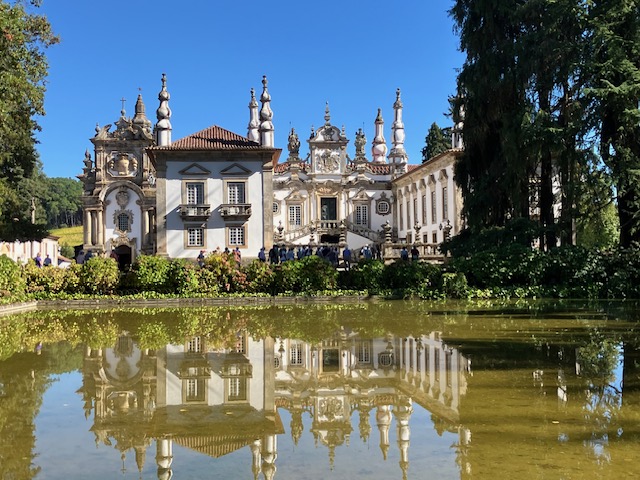
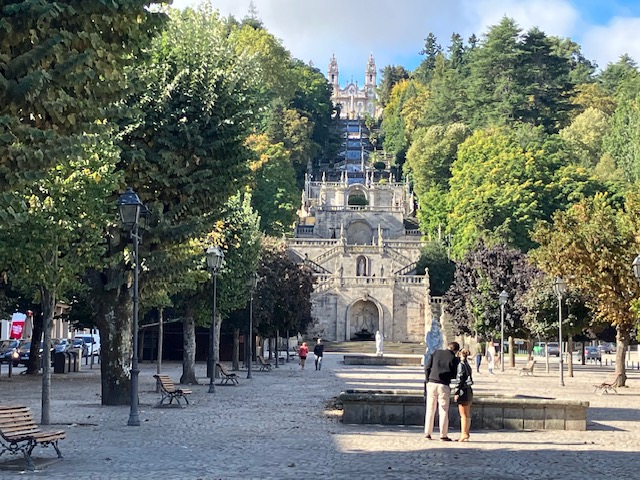
As well as these cities, we visited the Baroque Mateus Palace and its gardens. We also went to Lamego and its famous Sanctuary of Our Lady of Remedies Church which is impressively set towering over the city. Our coach dropped us off at the top but some of the more adventurous of us walked back down the 690 steps. The Portuguese arm of the Camino de Santiago passes by.
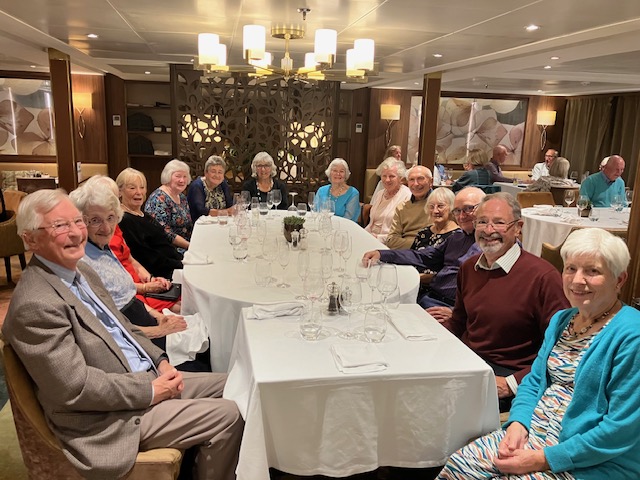
We went out to dinner at a Quinta which, as well as making excellent white, ruby, tawny and vintage port and good table wines, served us an excellent meal to go with them! We visited a 12th century hilltop walled village, Castelo Rodrigo, and nearby caught sight of 3 massive Griffon Vultures circling below us.
Of course we could alternatively sit out on deck, relax and watch the beautiful countryside passing us by, before the good staff on the ship served us our lunch, tea or dinner! And, if you weren’t too tired, there was always after dinner entertainment.
Peter Hetherington
Report on visit Porto and Gaia - South of the river, in Gaia, close to our moorings, we toured Calam Wine Cellar and learned some more of the history of port wine and enjoyed tastings. By coach we crossed the Douro and toured the city of Porto with its well preserved medieval streets. After admiring far reaching views we walked downhill from the Romanesque cathedral, visited the beautiful vestibule of the railway station with its magnificent azulejo tiles recounting the city’s fascinating history, looked at monuments and very tall, narrow buildings clad in colourful patterned tiles and historical pictures. Blue and white predominated.
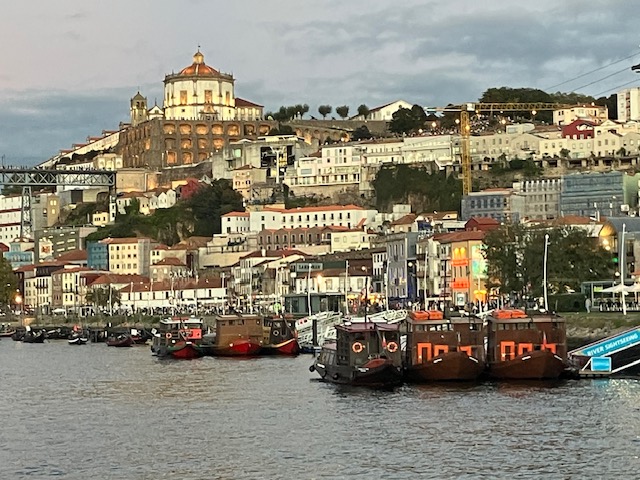
Quaint cobbled streets led us down to the medieval riverside quarter which was vibrant with noisy people eating, drinking, and enjoying the atmosphere. We walked a short way along the north bank of the river, over the very impressive double decker wrought iron bridge designed by Eiffel and back to Giai and our ship, MS Splendour, looking at the attractive moored Rabelo boats as we passed by.
Jill Ives
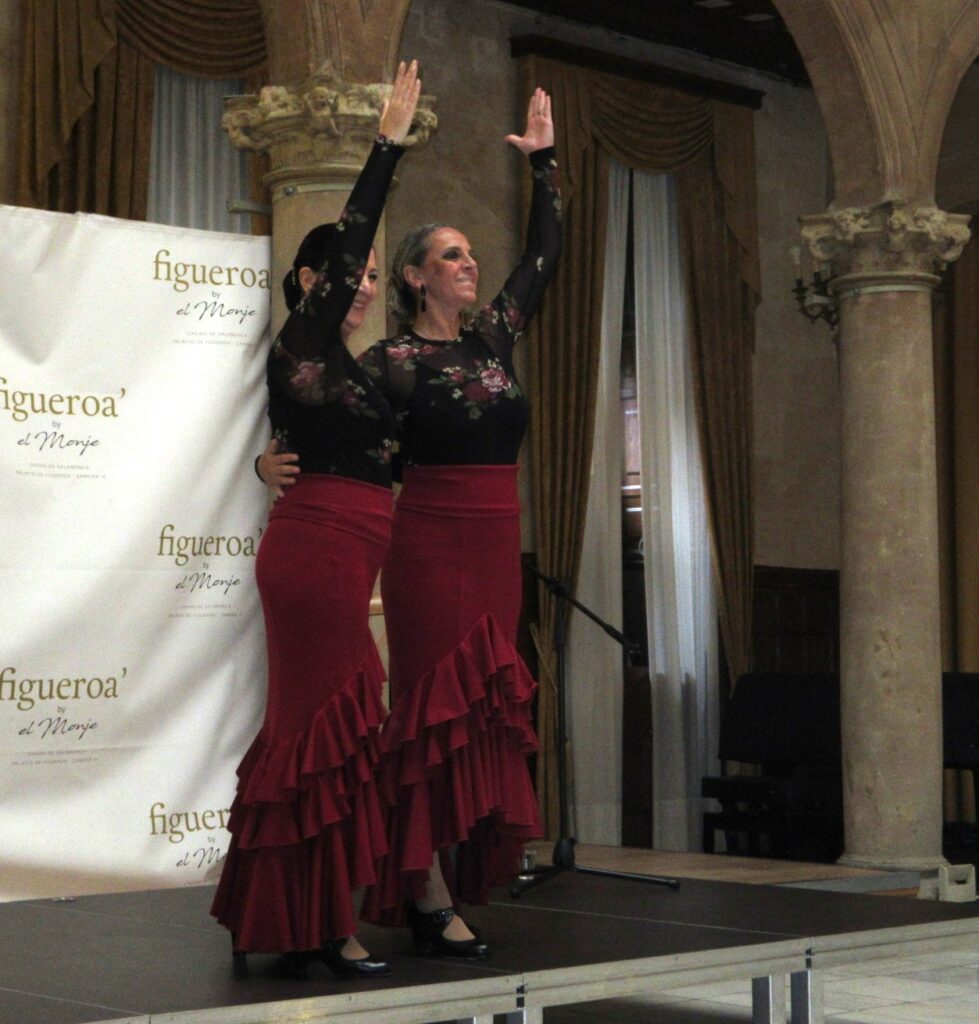
Day 4 - Our trip to Salamanca in Spain. Our boat, the M.S Douro Splendour had travelled from Porto to where the Douro river met and in fact formed the Portuguese/Spanish border at Vega Terron. We had an early start, disembarking onto the coaches that had followed us throughout the cruise, and wended our way out of the steep river valley onto the plateau where the scenery changed completely from the endless rows of vines, almonds, and olives, to wide open country as far as the eye could see. We travelled for about 2 hours to reach Salamanca. We had some free time before lunch to briefly explore the city and then we were treated to lunch in the Casino, (a grand municipal hall).Lunch comprised Tapas on the tables followed by soup and a cold buffet with wine and water served as required. All very enjoyable. We were then entertained by two Flamenco dancers in a variety of beautiful dresses dancing to traditional Spanish music and another lady who accompanied them with Spanish songs, (with a little audience participation).
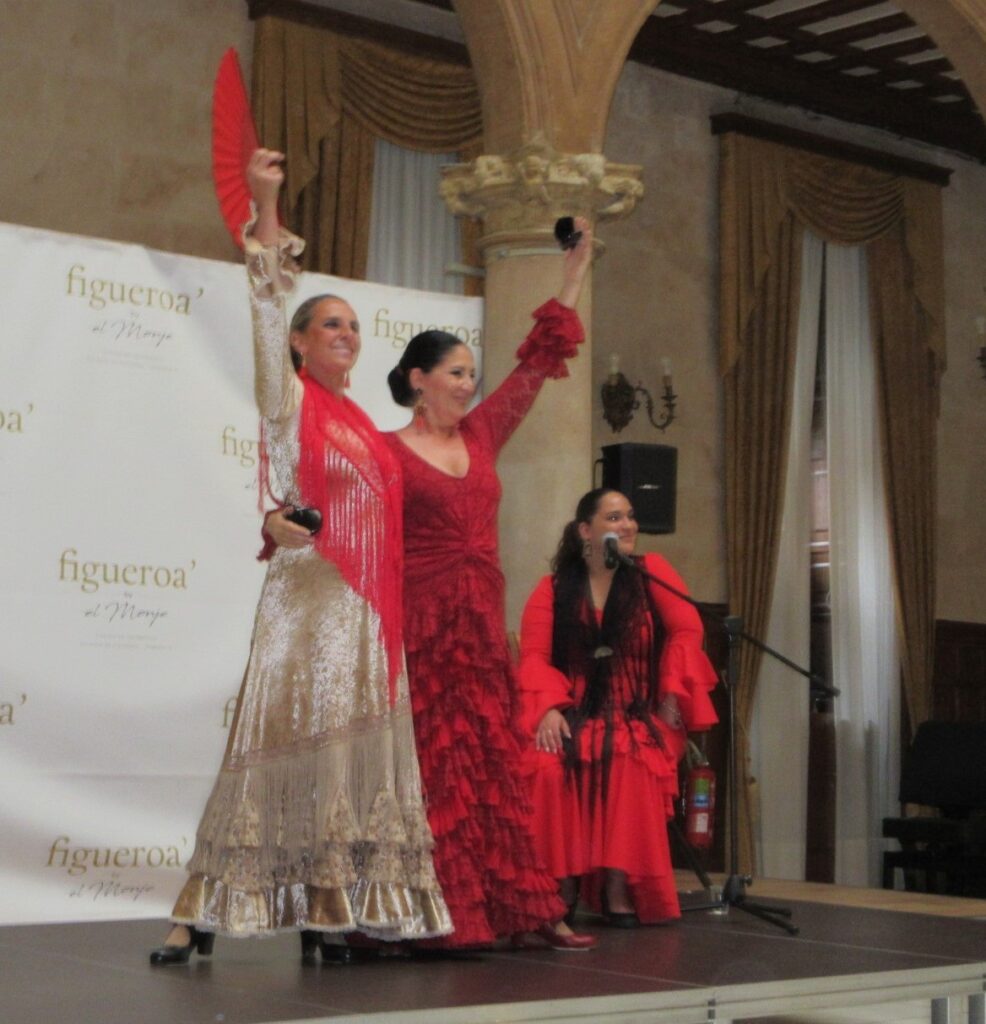
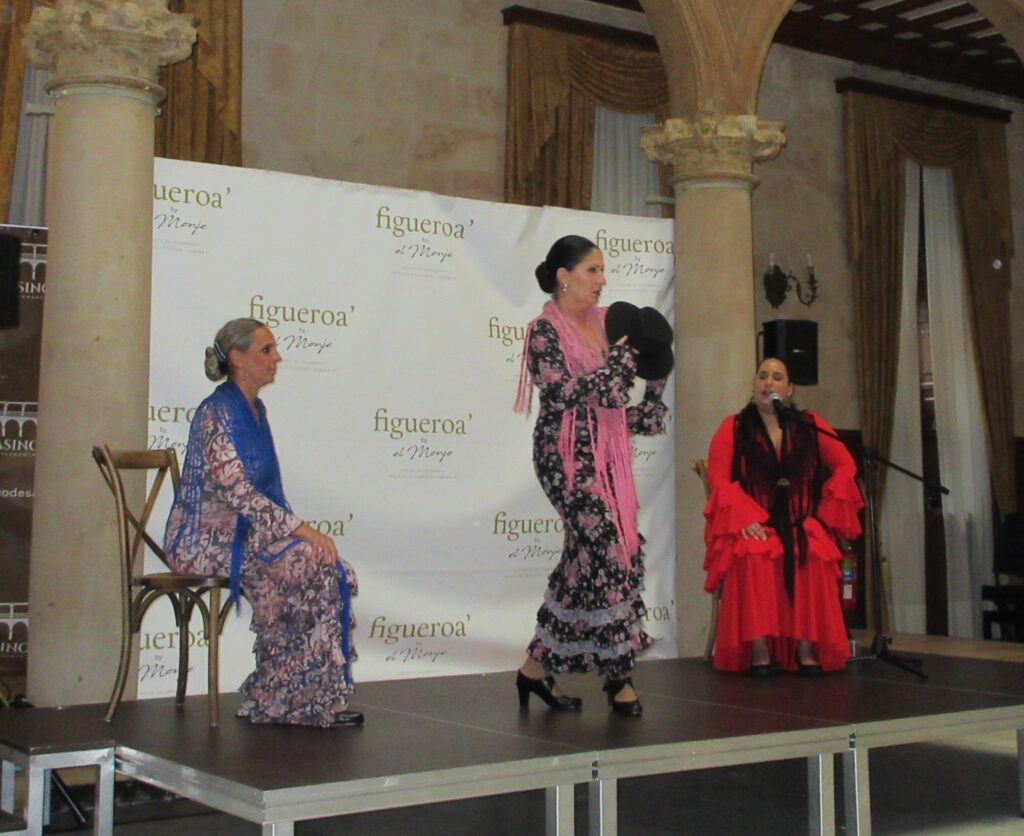
Flamenco
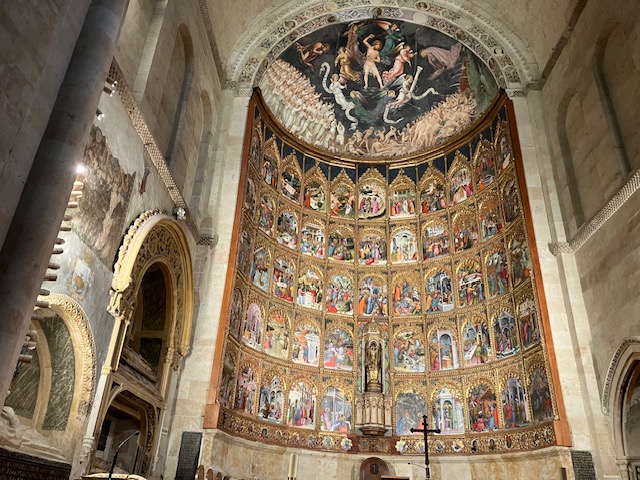
Called Spains “Golden City”, we started our guided tour of Salamanca after lunch in the Plaza Mayor, a grand central square which is a focus for many activities. The city is home to a magnificent University, the “Universidad Pontificia” founded in 1218 which currently has around 55,000 students. It also has two Cathedrals which turned out to be joined to each other, or as our guide described “semi-detached”. The first was built between 1140 and 1150, but in the 1500’s it was decided that a larger building was required so in1513 the new cathedral was started in the Gothic style and was finally finished in the 18th century. The city also boasts an art museum specialising in Art Nouveau and Art Deco with examples of glassware, figurines, bronzes, as well as paintings and furniture. There was also a Roman bridge and other plazas but due to time constraints we were unable to visit them all.
After an enjoyable day visiting a beautiful historic city, we rejoined our coaches to return to the M.S Douro Splendour. Mike Dix